
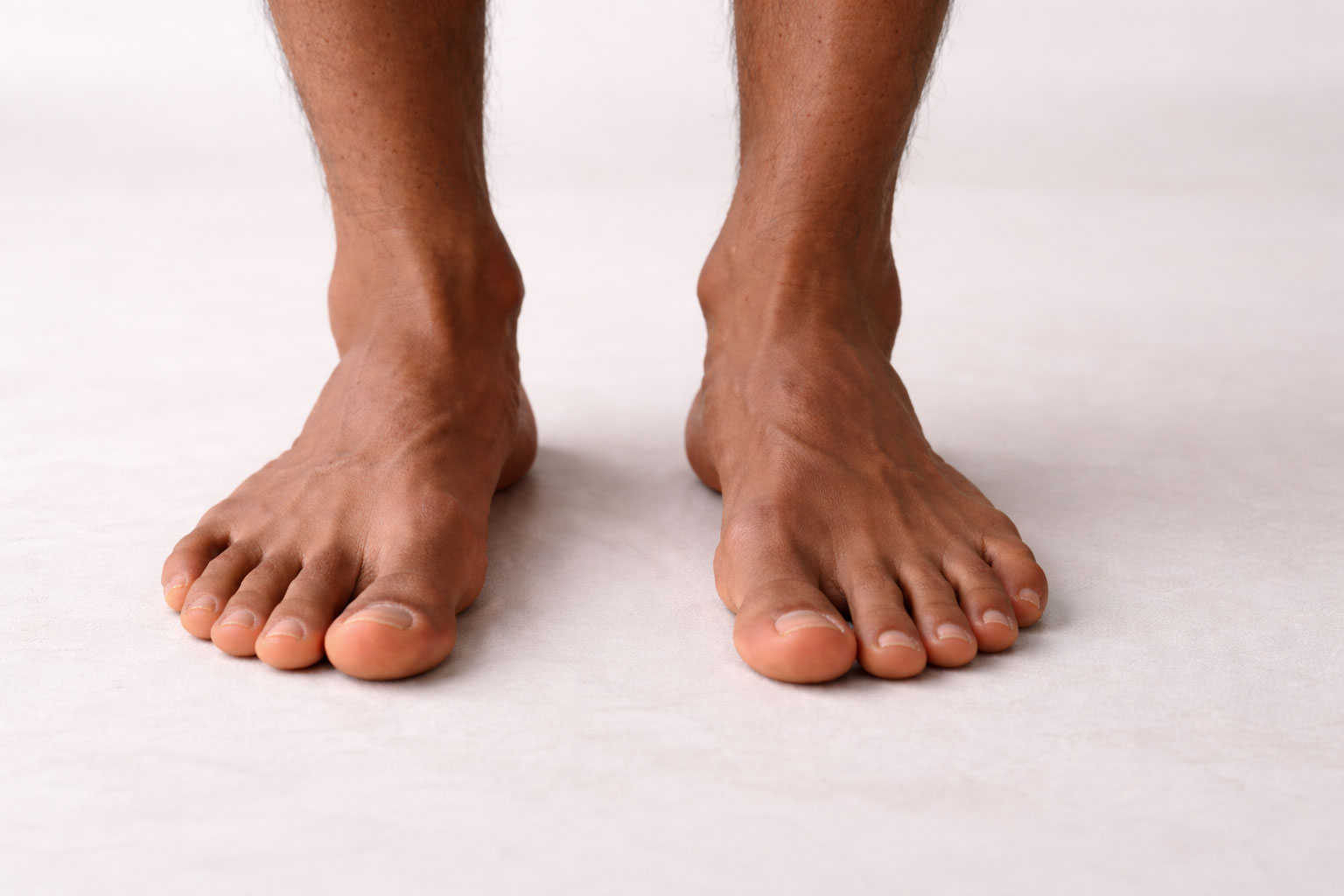
Why foot strength matters is something most adults don’t think about until pain, balance issues, or mobility limitations start to appear. In other words, your feet are the foundation of movement, influencing balance, posture, joint alignment, and long-term mobility. As we age, maintaining foot strength becomes increasingly important for injury prevention, confident movement, and overall physical independence.
Strong feet aren’t just for athletes — they’re essential for balance, injury prevention, everyday mobility, and long-term joint health. Whether you’re in your 30s or heading toward 60 (or beyond!), building and maintaining foot strength is one of the most impactful yet overlooked aspects of physical health.
What Is Foot Strength? Understanding the Foundation of Movement
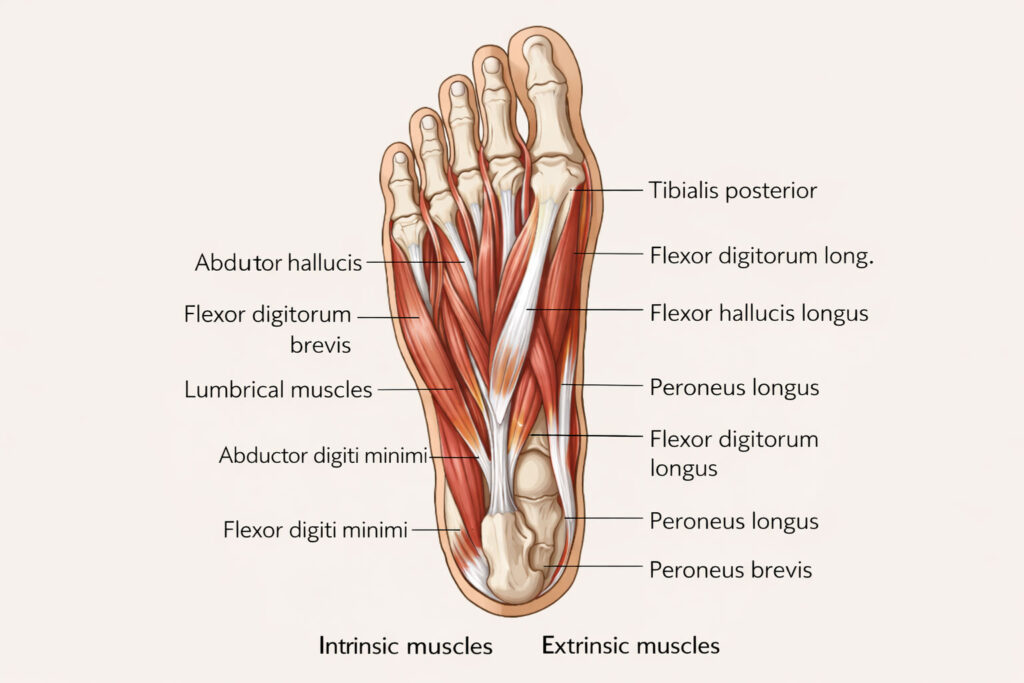
Foot strength refers to the muscles in your feet and ankles that control posture, balance, shock absorption, and propulsion during movement. These include the intrinsic foot muscles (IFMs) — small muscles within the foot itself that support the arch and provide stability — and the extrinsic muscles that control movement and force transmission.
As a result, your feet are the first point of ground contact when walking, running, climbing stairs, or standing. Weakness here doesn’t stay isolated — it affects how force travels up your body, impacting ankles, knees, hips, and even your lower back.
Why Foot Strength Matters for Balance and Mobility
1. How Foot Strength Matters as You Age
As we age, maintaining balance becomes critical to avoid falls — a major health risk for older adults. In particular, research shows that stronger intrinsic foot muscles are linked with better dynamic balance and stability.
2. Better Posture and Body Alignment
Feet act as the foundation of the kinetic chain up the body. Therefore, weak foot muscles can contribute to misalignment higher up the body — contributing to knee, hip, and back pain. Strengthening foot muscles helps maintain proper alignment and reduces compensatory strain.
3. Injury Prevention in Everyday Life and Sports
Strong feet handle impact forces more efficiently and adapt better to uneven surfaces. As a result, this lowers the risk of common injuries like ankle sprains, plantar fasciitis, and overuse issues.
4. Better Functional Mobility and Confidence
Strong feet make daily movements — walking, climbing stairs, standing for long periods — more efficient and less fatiguing. This improves mobility, promotes an active lifestyle, and supports independence as you age.
5. Enhanced Athletic Performance
Similarly, for runners, hikers, and fitness lovers, foot strength contributes to more powerful push-offs, better force distribution, and improved agility. Some studies show toe flexor strength relates to horizontal explosive performance such as sprint acceleration and quick direction changes. (Sportsmith)

The Importance of Foot Strength for Healthy Aging
According to a systematic review, intrinsic foot muscle training shows positive effects on foot function and balance, supporting the value of targeted exercises. (PMC)
Additional research links increased foot muscle strength with reduced fall risk and better overall stability, especially in older adults. (Nature)
Overall, evidence supports the idea that foot strengthening isn’t just about comfort — it’s functionally important for long-term mobility and injury prevention.

Common Causes of Weak Feet (and What You Can Do)
✔ Modern Footwear
Highly cushioned, restrictive shoes may feel comfy but often dampen sensory feedback and reduce natural foot muscle use, weakening them over time.
✔ Aging
Meanwhile, foot muscle strength naturally declines with age. Left unaddressed, this contributes to instability and discomfort.
✔ Sedentary Habits
Over time, long periods of sitting or minimalist movement reduce foot engagement and strength.
Easy Foot Strengthening Exercises You Can Start Today
You don’t need fancy equipment. Here are simple, evidence-backed exercises recommended by health professionals:
1. Toe Taps
First, toe taps help improve toe control and body awareness. Raise heels and tap toes on the ground to strengthen the toes and improve coordination.
2. Alphabet Exercise
Next, write the alphabet with your foot while seated — a great way to build mobility and strength.
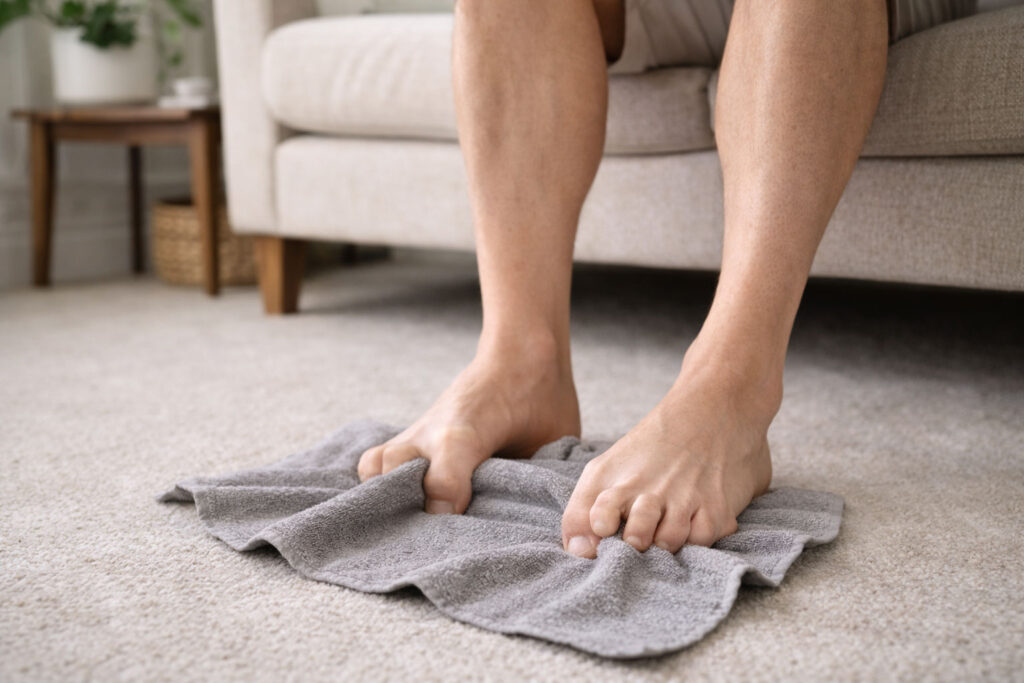
3. Towel Scrunch
Additionally, sit with a towel under your foot and curl toes to scrunch the towel — targeting intrinsic muscles.
4. Go Barefoot at Home
Finally, walking barefoot (safely) at home activates foot muscles more than cushioned shoes.
FAQ: Foot Strength and Your Health
Q: Do I need special equipment?
A: No — many strengthening exercises use body weight or household items like towels.
Q: Can foot strength reduce foot pain?
A: Foot strengthening may support foot function and balance, though pain outcomes vary; strengthening is most effective when paired with proper assessment and guidance.
Q: How often should I train my feet?
A: Start with 3–5 days per week of short sessions (5–10 minutes) and build gradually.
Final Takeaway

Ultimately, foot strength matters more than most people realize — it’s not just about comfort, it’s about balance, alignment, injury prevention, and lifelong mobility. As a result, regularly training your feet can improve your quality of life whether you’re 30 or 60. With simple daily habits and exercises grounded in research, your feet can become stronger, more stable, and better prepared to support your body for years to come.
References
- Georgia Spine & Orthopaedics. Foot Strengthening Exercises.
- Novant Health. Why It’s Important to Maintain Foot Strength.
- Harvard Health Publishing. Foot Exercises for Functional Fitness.
- PubMed Central. Effects of Intrinsic Foot Muscle Training on Foot Function and Balance.
- Nature Scientific Reports. Association Between Foot Muscle Strength and Fall Risk in Older Adults.
- TrainingPeaks. Why Foot Strength Matters.