

Muscle loss doesn’t start in old age — it starts much earlier than most people realize. In fact, by the time many adults reach their 60s, years of gradual strength decline have already set the stage for sarcopenia, the age-related loss of muscle mass and function. Rather than waiting until later in life, the most effective strategy is using strength training to prevent sarcopenia during your 30s, 40s, and 50s. As a result, building muscle in midlife creates a powerful reserve that protects strength, mobility, and independence as you age. That’s why the years between 30 and 60 matter far more than most people think.
Why This Matters in Your 30s–60s
Most people think muscle loss is something that happens “when you’re old.” However, sarcopenia — the medical condition describing age-related muscle decline — does not begin at retirement. Instead, it begins decades earlier. Because of this, your 30s, 40s, and 50s are when your future strength is built — or quietly dismantled. Ultimately, the choices you make in midlife determine how strong, mobile, and independent you’ll be in your 70s, 80s, and beyond.
In this article, you’ll learn:
- What sarcopenia is
- When muscle loss really begins
- Why early strength training matters
- How to train now to protect your future
- What research says about preventing age-related muscle loss
What Is Sarcopenia?
Sarcopenia is the gradual loss of muscle mass, strength, and performance with aging. As a result, unlike cosmetic muscle changes, sarcopenia leads to real functional decline — difficulty standing up, walking, climbing stairs, and preventing falls.
According to updated international guidelines, the most important early sign of sarcopenia is loss of strength, not just reduced muscle size.
Medical Classification
- Probable sarcopenia – low strength
- Confirmed sarcopenia – low strength + low muscle mass
- Severe sarcopenia – inability to perform daily physical tasks
Muscle Loss Starts Earlier Than People Realize
Many people imagine muscle loss as an “elderly problem.” But in reality, research shows:
After age 30, muscle mass declines by approximately 3–8% per decade — accelerating after age 60.
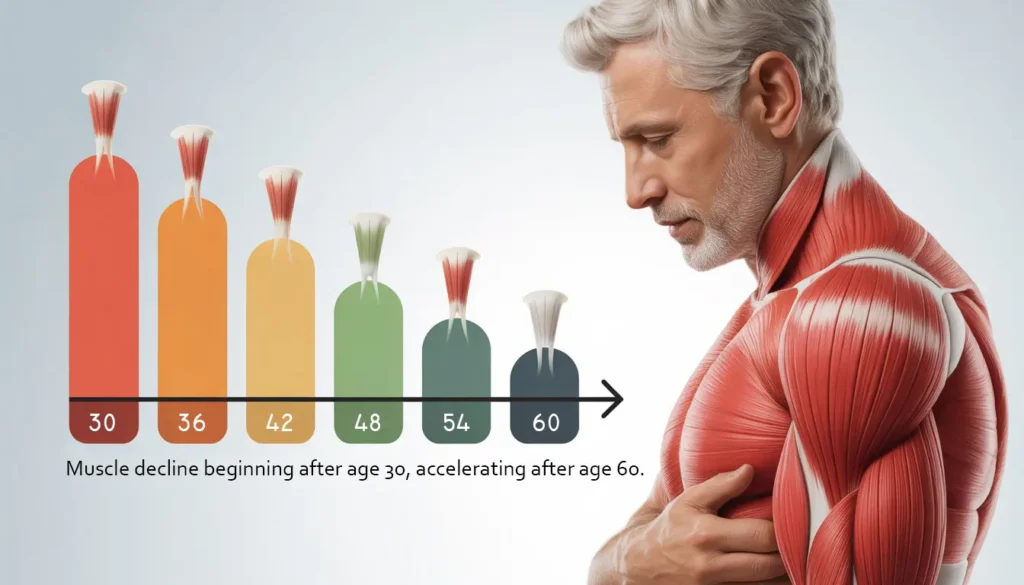
What this means is simple:
If you begin your 60s already weakened, sarcopenia progresses faster, not slower.
Therefore, the foundation you build in your 30s–50s is what you’ll physically rely on decades later.
Why Strength Training to Prevent Sarcopenia Matters Between 30 and 60
Importantly, research consistently shows that strength training to prevent sarcopenia is most effective when it begins in midlife, long before age-related muscle loss becomes severe. In other words, strength training doesn’t just build muscle in the present. It acts as a long-term biological insurance policy for the future.
1. You Build a “Muscle Reserve”
Greater muscle mass in midlife equals more tissue to lose later.
In other words, think of muscle like a retirement account.
The earlier you deposit more, the longer it lasts.
2. You Preserve Motor Neurons
Over time, aging naturally reduces the nerve cells that activate muscle fibers. However, resistance training helps counteract this decline by:
- Slowing neuron loss
- Improving nerve signaling
- Preserving neuromuscular junctions
3. You Reduce Anabolic Resistance
With age, your body becomes less responsive to protein intake. As a result, the muscle-building signal weakens. Fortunately, training preserves-sensitivity, so protein remains effective longer.
What Happens If You Wait Until Your 60s or 70s?
The good news is strength training still works later in life. However:
- It’s harder to regain muscle than it is to maintain it.
For example, people who start training at 70 improve — but those who trained at 40 prevent most of the loss entirely.

The Cellular Benefits of Strength Training
At a cellular level, training protects:
- Muscle fibers
- Motor neurons
- Mitochondria
- Satellite cells (regenerative muscle cells)
This means strength isn’t just fitness — it’s longevity engineering.
The best Strength Training strategy to Prevent Sarcopenia for ages 30-60
Training Frequency
Generally, train 2–4 days per week. This should provide enough stimulus without overuse.
Exercises to Focus On
Specifically, prioritize compound movements:
- Squats
- Deadlifts
- Rows
- Push-ups
- Overhead presses
- Lunges
- Pull-ups
These will activate the most muscle mass because they involve multiple joints.

Use Progressive Overload
Muscles respond only when challenged.
Therefore, track:
- Weight
- Reps
- Sets
Over time, aim to slowly improve — not just repeat.
Protein Intake Affects Your Future Strength
In addition to training, protein intake plays a critical role.
Recommended intake:
0.45-0.55g/lb/day or 1.0–1.2g/kg/day
- For a 140 lb (64 kg) adult: 64-76 grams/day
- For a 160 lb (73 kg) adult: 73-87 grams/day
- For a 180 lb (82 kg) adult: 82–98 grams/day
- For a 200 lb (91 kg) adult: 91-109 grams/day
- For a 220 lb (100 kg) adult: 100-120 grams/day
- For a 240 lb (109 kg) adult: 109 – 131 grams/day
Additional Ways to Protect Muscle as You Age
Besides exercise, other habits matter:
- Daily Movement – Avoid long sedentary periods.
- Sleep – Poor sleep reduces testosterone and growth hormone.
- Stress Management – Chronic cortisol destroys muscle.
Frequently Asked Questions
When should you start training to prevent sarcopenia?
Answer: In your 30s or earlier. Muscle decline begins long before seniors feel weak.
Can strength training reverse sarcopenia?
Answer: Yes — it is the most effective treatment.
Is cardio enough?
Answer: No. Only resistance training preserves muscle mass.
How much training is enough?
Answer: Two to Three sessions a week is sufficient.
Final Takeaway — Your Future Strength Starts Now
Ultimately, what you do between 30 and 60 determines:
- How fast you age
- How strong you remain
- How long you stay independent
For adults between 30 and 60, consistent resistance exercise is one of the most reliable forms of strength training to prevent sarcopenia and preserve long-term strength, mobility, and independence. If you want a strong 70-year-old body, start training now.
In short, muscle is youth insurance.